
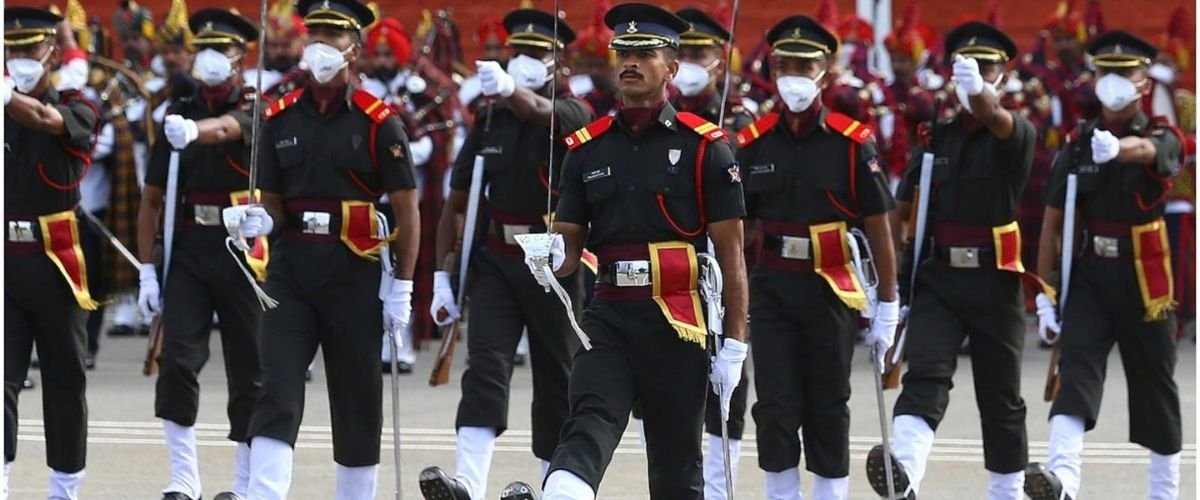
Choosing the right school for your child is one of the most important decisions a parent can make. Today, parents are not only looking for academic excellence but also want their children to develop discipline, confidence, leadership skills, physical fitness, and a strong sense of responsibility.
This is one of the major reasons why military schools in India are becoming an attractive choice for parents who want a well-rounded education for their children.
But what makes military schools different from regular schools? And how can institutions such as GS India Defence Academy help students prepare for this journey?
The skills that students learn in schools—such as discipline, teamwork, communication, resilience and time management—are also useful, in many other educational and professional paths.
What exactly makes military schools different?
Let us explore the benefits.
What Makes Military Schools Different From Regular Schools?
The biggest difference is not simply the word “military.”
It is the overall learning environment.
A military school typically combines academics with a structured daily routine, physical activities, co-curricular opportunities, residential life and character-building experiences.
For example, official information from Rashtriya Military Schools highlights academics, preparation time, sports facilities, laboratories, house activities and a structured campus environment.
Students therefore learn both inside and, outside the classroom and also learn from these activities.
A normal school day might focus primarily on classes and extracurricular activities. A residential military-school environment can add another layer: students learn to manage their belongings, follow schedules, participate in group activities, interact with peers from different backgrounds and become more responsible for their daily routines.
That combination can contribute to a more holistic educational experience.
Discipline That Becomes a Daily Habit
One of the most visible features of military schools is discipline.
But discipline is not simply about following instructions.
For a student, it can mean learning to:
- Wake up and sleep at appropriate times
- Complete tasks within deadlines
- Maintain personal belongings
- Follow a timetable
- Respect rules
- Attend activities regularly
- Balance academics with physical activities
- Take responsibility for assigned duties
Rashtriya Military School materials describe a structured environment in which cadets follow school discipline and younger students receive guidance from senior cadets.
Over time, such routines can help students understand an important lesson:
Consistency often matters more than motivation.
A student may not feel like studying every day, exercising every morning or completing every responsibility—but a structured routine encourages them to keep going.
That habit can become useful long after school life.
Strong Academics Without Ignoring Life Beyond Books
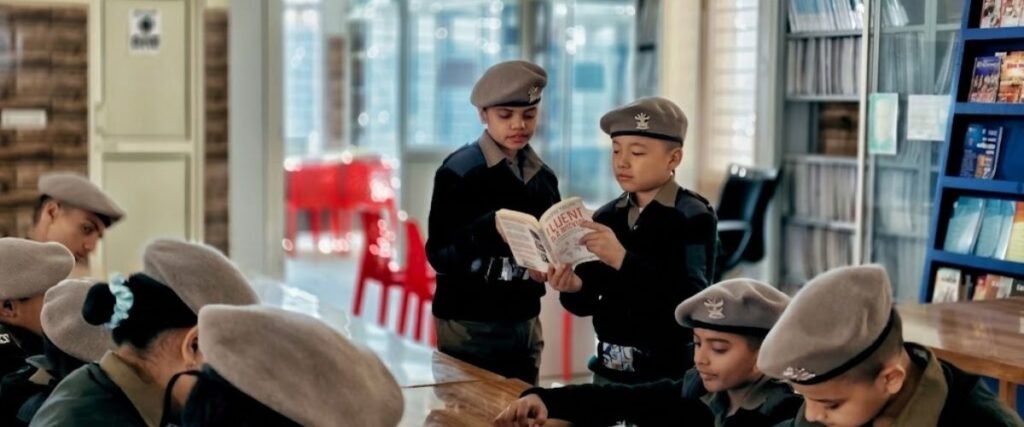
The word “military” sometimes makes people assume that academics are secondary.
That is not the purpose of these schools.
Military schools provide formal academic education alongside their structured activities. Rashtriya Military Schools for example use the CBSE curriculum and students sit for CBSE board exams.
Students therefore get a chance to build an academic foundation, while participating in sports, join co‑curricular activities and enjoy other parts of life at a residential school.
This balance is especially useful, for students who like learning through different kinds of activities instead of staying inside a classroom all day.
Physical Fitness Becomes Part of Student Life
In today’s world, where kids spend a lot of time looking at screens, staying physically fit and mentally active is key to their growth.
Military schools usually focus a lot on sports, exercise and being outdoors.
The official Rashtriya Military School website mentions facilities and activities, like football, hockey, basketball, cricket, swimming and other sports. Depending on which campus you’re looking at.
Regular physical activity can help students build strength, stay healthy and learn teamwork. It also helps them focus better in class and feel more confident.
Being active every day doesn’t just make them fit. It shapes their character too.
- Stamina
- Coordination
- Teamwork
- Sportsmanship
- Physical confidence
- Healthy routines
The goal isn’t simply to make students physically strong.
Sports can also teach children how to handle both success and failure.
You win a match. You celebrate.
You lose a match. You learn.
You make a mistake. You try again.
These are lessons that cannot always be taught through a textbook.
Leadership Starts With Small Responsibilities
Leadership does not suddenly appear when a student becomes an adult.
It can develop through small responsibilities during school years.
Military schools provide students with opportunities to participate in structured group activities, houses, sports, co-curricular programmes and responsibilities within the school community.
For example, RMS information highlights house systems, senior-junior interaction and opportunities for students to participate in activities such as debates, cultural programmes and sports.
A student may initially be responsible only for their own work.
Later, they may help organise an activity, guide younger students or take responsibility for a team.
These experiences can gradually teach:
Leadership = responsibility + communication + accountability.
How Can GS India Defence Academy Help?
GS India Defence Academy focuses on defence-oriented education and entrance preparation for students aspiring to join institutions such as RMS, RIMC and Sainik Schools, along with preparation for defence examinations at higher levels.
The academy’s approach can help students develop both academic preparation and the discipline required for competitive examinations.
Depending on the course, students can benefit from:
- Structured academic preparation
- Regular practice and tests
- Concept-based learning
- General Knowledge and current affairs
- Mathematics and reasoning preparation
- Exam-oriented guidance
- Regular assessment
- A disciplined learning environment
Teamwork Becomes Part of Everyday Learning
In a residential school, students spend considerable time around their peers.
They study together.
They play together.
They take part in competitions together.
They share their responsibilities.
This helps create chances to understand teamwork in a practical way.
Students learn that everyone in a team may have different strengths.
One person may be good at sports.
Another may be academically strong.
Someone else might be a good communicator.
A team that does well finds ways to use those skills.
This skill to work with people can be helpful no matter if a student ends up picking engineering, medicine, management, defence, starting a business, doing research or some other job.
Communication Skills Grow Beyond the Classroom
Academic knowledge is important, but students also need to learn how to express their ideas.
Military schools often provide opportunities through:
- Debates
- Declamation
- Public speaking
- Cultural programmes
- Group activities
- Sports
- Inter-house competitions
- Presentations
The Rashtriya Military School mentions activities like debating, speaking in public, acting, music and cultural events.
These activities encourage students to speak, participate and interact.
A child who starts off shy, about speaking in front of a group can slowly feel more at ease with chances to do so.
That self-confidence can help in tests, job interviews, college speeches and work places.
Residential Life Teaches Independence
For children going to a residential military school can feel like a big shift. They might be far from their family, for extended periods of time. They also have to take care of daily tasks on their own.
This can encourage independence.
Students gradually learn to:
- Organise their belongings
- Manage their schedules
- Take care of personal routines
- Adapt to a new environment
- Solve everyday problems
- Seek help when necessary
- Build relationships with peers and teachers
This doesn’t mean students are expected to handle everything alone.
Residential schools have teachers, wardens and support systems.
The difference is that students get more opportunities to practise independence within a structured environment.
Character Building Goes Beyond Academic Marks
A strong reason to choose military schools for students is that they put a lot of focus on character.
Marks can show how a student did in an exam.
Marks do not always reveal whether the student is responsible, dependable, respectful or ready to help others.
Rashtriya Military School Chail emphasizes the motto “Sheelem Param Bhushanam” meaning “Character is the Highest Virtue.”
Developing character can include habits such, as:
- Honesty
- Responsibility
- Respect
- Punctuality
- Team spirit
- Self-control
- Accountability
- Helping others
These qualities can influence how students approach challenges throughout their lives.
A Structured Environment Can Help Students Manage Time
Time management is a skill many students find hard to learn.
Between school, homework, mobile phones, social media, entertainment and other things it can be hard for kids to make a routine.
A structured residential school environment teaches students, about fixed schedules and organized activities.
For example, official RMS information describes a routine that includes dedicated preparation time for studies alongside academic periods and extracurricular activities.
Students therefore get regular opportunities to practise:
Study → Activity → Rest → Responsibility → Repeat
Over time, this can help them understand how to organise limited time effectively.
Early Exposure to Defence and Leadership Opportunities
For students who want to join the Armed Forces military schools can offer an environment where they learn discipline, physical training, teamwork and leadership from an early age.
Sainik Schools have historically been associated with preparing students, for defence careers. Today the Sainik Schools Society says their main goal is education and training, that helps cadets grow into responsible citizens and succeed in many areas of life.
So parents should not think of military schools just as a quick way to get into the defence forces.
Instead, it can be considered an educational environment where students interested in discipline, structured learning, sports and leadership may find a suitable environment.
Co-Curricular Activities Make Learning More Complete
Education shouldn’t stop when the textbook closes.
Military schools can provide opportunities in areas such as:
- Art
- Music
- Drama
- Debates
- Photography
- Craft
- Trekking
- Scouting
- Sports
- Cultural activities
Rashtriya Military School documentation lists several such activities as part of cadet life.
These activities give students a chance to find interests that don’t show up in classroom tests.
A student who finds it hard to stand out in school, might realize they are great at speaking in front of people.
Another may discover a passion for athletics.
One more could start to enjoy music or creative work, like art or writing.
That’s why holistic education is so important.
Is a Military School Suitable for Every Student?
Not necessarily.
This is an important point for parents.
The military‑school environment is a place that’s very structured and demanding.
Students need to be comfortable, with routines, discipline, physical activities and residential life.
Parents should consider their child’s:
- Personality
- Independence
- Academic interests
- Physical readiness
- Comfort with residential schooling
- Ability to adapt to structured routines
- Interest in group activities
A military school is chosen because the learning environment fits the child not merely because the name sounds prestigious.
The right school is the school where the student learns, adapts and grows.
Military Schools and Defence Career Preparation
Many people think that going to a school automatically gets a person into the Armed Forces. That is not true. A military school can give an environment that helps build traits for a defence career but a student still has to meet eligibility rules and pass examinations and selection stages that the Armed Forces require.
For instance, Sainik School admission takes place at entry levels via the AISSEE process while Rashtriya Military Schools use their own admission methods. If a student wants to join the NDA, that student must also meet UPSC eligibility conditions. Pass the NDA selection test.
So military school can be viewed as preparation through environment and education—not an automatic guarantee of a defence career.
What Do Students Take Away From Military School?
- The valuable outcome may not be a particular examination score.
- It can be the collection of habits developed over years.
- Discipline.
- Fitness.
- Teamwork.
- Responsibility.
- Communication.
- Time management.
- Confidence.
- Independence.
- Leadership.
These qualities can remain useful regardless of the career a student eventually chooses.
A student may enter a military school thinking about the Armed Forces and later choose engineering.
Another may discover an interest in medicine.
Someone else may pursue management, technology, research or entrepreneurship.
The habits developed during school can travel with them.
Final Thoughts: Is Military School the Right Choice?
Military schools can provide students with an environment where they learn to study seriously, stay physically active, manage their time, take responsibility, work with others, and develop confidence.
For parents who are considering RMS, RIMC, Sainik School or other defence-oriented educational opportunities, the journey can begin well before the entrance examination.
With the right guidance, consistent preparation, and a balanced approach, students can build the academic foundation and personal qualities required to take on future challenges.
GS India Defence Academy aims to support students and parents on this journey by providing structured preparation and guidance for defence-oriented entrance examinations. The ultimate goal is not just to clear an examination it is to help students become disciplined, confident, responsible and future-ready individuals.



