
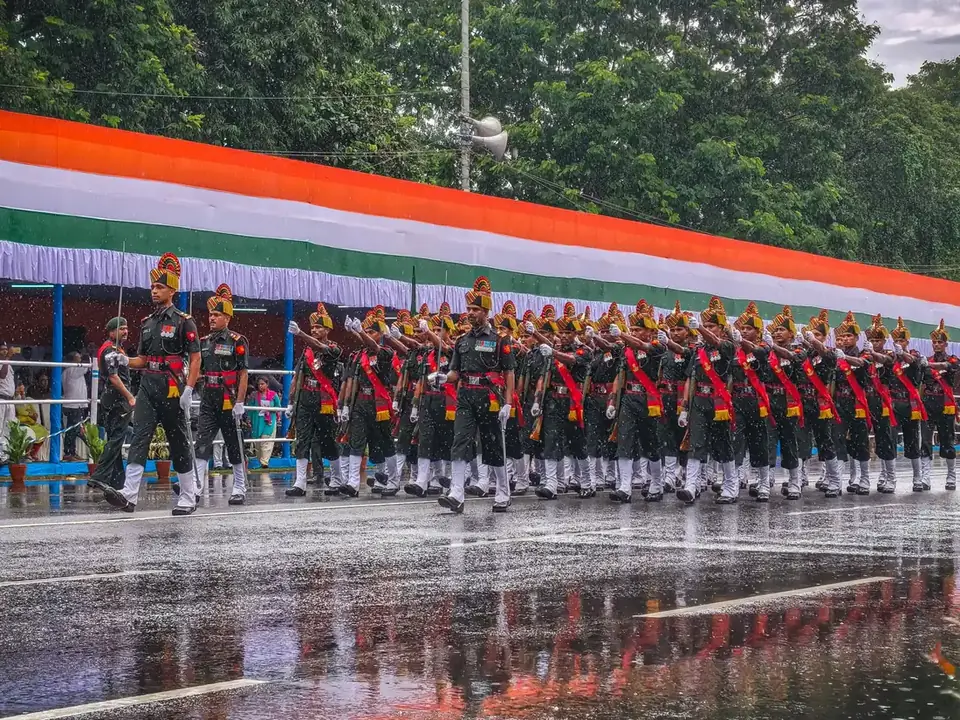
RIMC admits students to Class VIII only, through one college in Dehradun. The five Rashtriya Military Schools (RMS) admit to Class VI and IX through RMS CET. The 33 Sainik Schools admit to Class VI and IX through the All India Sainik Schools Entrance Examination (AISSEE). All three take boys and girls and describe themselves as preparing cadets for the armed forces, but they differ in entry class, exam, seats and rules.
The right choice depends on your child’s class today, the state you live in and the exam date you can reach. This page compares the three using only official notices, checked on 12 October 2026: the NTA’s RIMCEE-2026 and RMS CET-2026 bulletins, the AISSEE-2026 bulletin and the Sainik Schools Society website. We leave out opinion rankings, because none of these sources publishes one.
How do RIMC, RMS and Sainik Schools compare?
| Point | RIMC | Rashtriya Military Schools | Sainik Schools |
|---|---|---|---|
| What it is | One residential college at Garhi Cantt, Dehradun, a Category A institution of the Ministry of Defence | Five English-medium residential public schools run under the Ministry of Defence: Chail, Ajmer, Dholpur, Belgaum, Bengaluru | 33 schools run by the Sainik Schools Society, an autonomous body under the Ministry of Defence, with partnership schools alongside |
| Entry class | Class VIII only | Class VI and Class IX | Class VI and Class IX |
| Age band in the latest notice | 12½ to 14 years on 1 July 2027 (December 2026 exam) | 10 to 13 for Class VI and 13 to 16 for Class IX, on 31 March 2027 | AISSEE-2026: 10 to 12 for Class VI and 13 to 15 for Class IX, on 31 March 2026. The 2027 bulletin was not out when we checked. |
| Entrance exam | RIMCEE: NTA runs Stage I; RIMC runs the viva and medical | RMS CET: run by the NTA for the Army Education directorate | AISSEE: run by the NTA, followed by e-counselling |
| Next exam date | 6 December 2026 | 13 December 2026 | AISSEE-2026 was held on 18 January 2026; the next date is not yet notified |
| Stages | Written exam, viva of 50 marks, medical | Written exam, medical, interview of 20 marks (Class VI) or 50 marks (Class IX) | Written exam, e-counselling by rank, medical fitness and document checks; the bulletin lists no interview |
| Seats | Tentatively 25 boys and 10 girls a term, two terms a year | School-wise and class-wise vacancies set by the Army Education directorate | School-wise tentative vacancies listed in an appendix to the bulletin |
| Girls | Yes: tentatively 10 a term, on an all-India merit list with zone-wise seats | Yes: Class VI 10% of seats or a maximum of 30, Class IX 10%, across the five schools | Yes: Class VI at least 10% of seats or 10, whichever is higher, in each school; Class IX subject to vacancies |
| Domicile and reservation | Boys ranked within their own State or UT; no reservation policy in selection | No state quota; 70% serving and retired JCOs and other ranks, 20% officers, 10% civilians, with OBC, SC and ST shares inside | 67% home State and 33% other States, with SC, ST and OBC shares inside and a defence share of the rest |
| Board | CBSE Class XII after five years | CBSE, English medium, Science stream only after Class 10 | CBSE, English-medium residential schools |
| Annual cost | ₹98,650 for general cadets plus ₹50,000 refundable deposit in year one | Tuition and caution money by category, listed in the NTA prospectus | School-wise; check each school and the Society’s circulars |
A note on Sainik Schools: the AISSEE-2026 bulletin says the reservation of seats in Sainik Schools is subject to the outcome of an appeal before the Madras High Court. Read the bulletin for the cycle you are applying in. Detailed pages are available for RIMC eligibility and age limit, the RMS CET guide and Sainik School admission through AISSEE.
Which one fits my child’s class and state?
Start with the class your child will be in when admission happens, since each route opens at a different door.
- Child in Class V: Class VI entry at a Rashtriya Military School or a Sainik School. RIMC is not available at this stage.
- Child in Class VII: Class VIII entry at RIMC, with the age and date-of-birth window set in the current bulletin. The same child can also look at Class IX entry once they pass Class VIII, at an RMS or a Sainik School.
- Child in Class VIII: Class IX entry at an RMS or a Sainik School, subject to vacancies and age.
- State of residence: RIMC ranks boys inside their State, so a crowded State means more competition for its vacancies. Sainik Schools keep two-thirds of their seats for home-State candidates, so a school in your own State helps. RMS has no state quota, but its five schools sit in only three States.
- Defence or civilian family: RMS reserves most seats for serving and retired service personnel and ten per cent for civilians, so civilian families should study the school-wise vacancies. Sainik Schools carry a defence share of their own.
- Girl child: all three open to girls, but at different scales. Our guide to military schools for girls in India sets out each route.
Not sure which exam to aim at? Call or WhatsApp us on +91 70170 31757 for free counselling, and we will go through the class, age and state with you.
How do the admission stages differ?
The order of stages is a real difference. RIMC calls only written-exam qualifiers to a viva voce held with the State governments and sends only viva-qualified, merit-listed candidates to a medical examination. Rashtriya Military Schools do the medical first and the interview after. Sainik Schools run no interview that we could find in the bulletin: candidates register for e-counselling after the result and are admitted by rank, subject to medical fitness and document verification. Pages that imply a Sainik School interview are not describing the official process.
Is Sainik School good? What are the benefits of RIMC?
The official documents describe aims, not rankings. RIMC’s bulletin says its primary mission is to serve as a feeder institution to the National Defence Academy and the Indian Naval Academy, while also stating that its cadets must still qualify the UPSC written exam and the Services Selection Board interview like other candidates. The Sainik Schools Society says its schools prepare cadets to join the NDA, the Indian Naval Academy and other officer academies. The RMS bulletin says the aim is to impart quality education and prepare cadets to join the defence services as officers.
None of these documents describes automatic entry to the NDA, and none reports outcomes we can verify, so a school’s value for your child rests on fit: the class, the board curriculum, the distance from home, the cost and your child’s readiness for residential life. Visit the school website, read the latest bulletin and talk to current parents where you can.
What are the common mix-ups?
- RIMC is not a Sainik School. It does not appear in the Sainik Schools Society’s list of 33 existing schools. Some notices still use an older label for it, so rely on the college’s own pages.
- RMS is no longer boys only. The schools’ admission page carries older wording, but the 2026 NTA bulletin describes co-educational schools with reserved seats for girls.
- Age bands move. RIMC raised its band for the December 2026 exam. Old pages show 11½ to 13.
- “Military school” is a loose phrase. It may mean RIMC, an RMS or a private school that uses the word. Check the exam: RIMCEE, RMS CET or AISSEE.
Frequently asked questions

FAQs
Questions parents ask us.
Can't find yours? Ask on WhatsApp; a counsellor usually replies within working hours.
Ask on WhatsAppWhat is the difference between RIMC and Sainik School?
RIMC is one college at Dehradun that admits to Class VIII through RIMCEE and has a viva voce and medical. Sainik Schools are 33 schools run by the Sainik Schools Society that admit to Class VI and IX through AISSEE and e-counselling.
What is the difference between RMS and Sainik School?
Rashtriya Military Schools are five schools run under the Ministry of Defence that admit through RMS CET, with a medical and an interview. Sainik Schools admit through AISSEE and e-counselling and have home-State and other-State quotas.
Is Sainik School good?
Official sources describe its aims and structure and do not rank it. Judge it by fit: class, curriculum, location, cost and your child's readiness for a residential school.
What are the benefits of RIMC?
RIMC describes itself as a feeder institution to the NDA and the Indian Naval Academy and offers residential education from Class VIII to XII. Its cadets still have to qualify the UPSC exam and the SSB to join the NDA.
Can girls join Sainik School, RIMC and RMS?
Yes. RIMC reserves about 10 places a term for girls, RMS reserves 10 per cent of seats across its five schools, and Sainik Schools reserve at least 10 per cent of Class VI seats or 10 seats per school.
What is RIMC school?
RIMC is the Rashtriya Indian Military College, founded in 1922 at Garhi Cantt, Dehradun, a residential college admitting boys and girls to Class VIII.
Do Sainik Schools have an interview?
The AISSEE-2026 bulletin describes a written exam, e-counselling by rank, medical fitness and document verification, and lists no interview.
Sources
GS India Defence Academy in Dehradun offers classroom coaching for all three routes: RIMC coaching, Sainik School coaching and RMS coaching, with separate boys’ and girls’ hostels and a mess. Call or WhatsApp +91 70170 31757 to ask about batches.

Admissions


