SSB coaching for candidates who already hold the call letter
Clearing the written examination is only half of an officer’s selection. After the paper, the Services Selection Board looks at something no test paper can measure: how a candidate thinks, plans, speaks, works with others and behaves under pressure. Many capable students lose their chance here, not because they lack ability, but because the format is unfamiliar and the preparation was left for the last week.
Our SSB coaching in Dehradun is built for exactly that stage. It suits candidates who have received a call letter for the NDA, CDS or AFCAT, applicants who have been shortlisted for the Army TES or the Navy 10+2 B.Tech entry, and students who want to begin early so that their habits are formed by the time the call comes. The course is taught in person at Street 1, Subharti Road, Nanda Ki Chowki, Lower Kolhupani. We do not teach online, since group tasks and interviews are practised best face to face.
Families comparing SSB coaching find a long list of options. The questions worth asking every academy, including us, are simple. Will my child get individual feedback? How many group tasks will they actually practise outdoors? Can they stay in a hostel during the batch? Where are the mock interviews held, and by whom? Visit during counselling and ask.
This page explains who can sit the SSB, how the process is structured, what we teach, and how our 12-day and one-month batches differ. If you are still at the written-exam stage, our NDA coaching and CDS coaching courses include SSB practice from the first month.
Who gets to the SSB
There is no separate entrance form for the SSB. A candidate reaches the board through the entry they have applied to, and the call-up depends on that entry’s own stage.
- NDA: candidates who qualify in the UPSC written examination are called for the Intelligence and Personality Test. The SSB carries 900 marks, the same as the two written papers combined.
- CDS: candidates who qualify in the written examination are called to the SSB. The SSB carries 300 marks for the Indian Military Academy, the Indian Naval Academy and the Air Force Academy, and 200 marks for the Officers Training Academy.
- AFCAT: candidates shortlisted from the online test are called to the Air Force Selection Board. Flying branch candidates also take a computerised pilot selection test, which the official AFCAT site describes as a once-in-a-lifetime test.
- Army TES and Navy 10+2 B.Tech entry: candidates are shortlisted on their JEE Main rank and called to the SSB. See our TES and Navy technical entry page.
Because the SSB follows an entry-specific process, your call letter tells you the board, the centre and the date. For the Army, selection centres are listed on the joinindianarmy.nic.in site at Allahabad (Prayagraj), Bhopal, Bangalore and Kapurthala. If you have just received a call letter and are anxious about the dates, call us at +91 70170 31757 and we will tell you honestly whether a 12-day or a one-month batch fits.
Sources
How the SSB is structured
UPSC’s notifications describe a two-stage selection procedure at the Services Selection Boards. Stage I comprises the Officer Intelligence Rating (OIR) tests and the Picture Perception and Discussion Test, and candidates are shortlisted on a combination of the two. Only those who clear Stage I are permitted to appear for Stage II, which comprises the interview, the Group Testing Officer tasks, the psychology tests and the conference, conducted over four days. The board therefore brings together four kinds of assessment.
| Phase | What is tested | What it looks for |
|---|---|---|
| Stage I: screening | An intelligence rating test and a picture-based perception and discussion test | Basic reasoning, observation and the ability to express an idea clearly |
| Stage II: psychology tests | Story-writing from pictures, word association, situation reaction and a self-description | Natural thought patterns, values and attitudes, written under time pressure |
| Stage II: group tests | Group discussion, planning exercise, outdoor obstacle tasks and group tasks | Leadership, cooperation, initiative and fair play in a team |
| Stage II: interview and conference | An interview on your background, interests and decisions, then the board’s final discussion | Honesty, clarity, self-awareness and motivation to serve |
The board looks for officer-like qualities, among them planning, cooperation, a sense of responsibility, initiative, courage and determination. No single test decides the outcome; the assessors combine what they see across the days. Candidates who pass the board go on to a medical examination, and the merit list is made from the final scores.
Sources
What we teach, stage by stage
Stage I: reasoning and the picture story
We run timed reasoning practice so the first-stage tests feel routine. For the picture-based test, candidates learn to notice the characters, mood and setting, build a quick story with a clear hero, and then defend it in a small group discussion without arguing for the sake of it.
Psychology tests: honest and quick
The psychology papers punish over-thinking. Candidates practise story writing, word association and situation reaction under strict time limits, and the answers are reviewed with feedback on patterns: too many negative themes, too little action, or answers that sound borrowed. The self-description exercise is used to help each candidate reflect on strengths, weaknesses and what other people would say about them.
Group tasks: outdoors, with a team
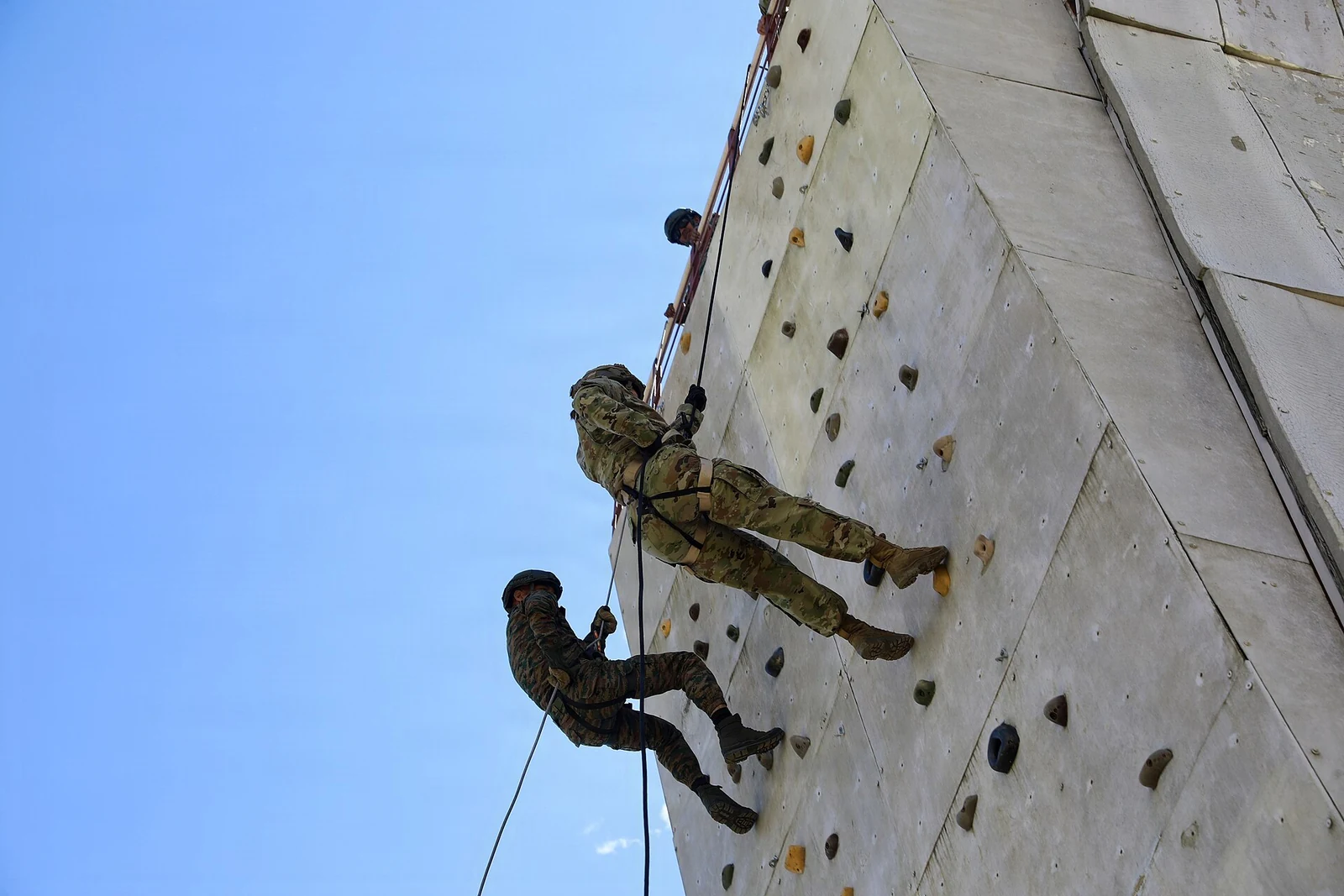
Group discussions, planning exercises and obstacle tasks are practised outdoors. The aim is not to win every discussion. It is to be the person whose contribution moves the group forward, and who can step back when someone else has the better idea.
Interview: your own story
Mock interviews are part of every batch. Questions follow your school, family, hobbies, current affairs and the reasons you want the uniform. The goal is to make your answers sound like you, not like a script learned from a video.
The 12-day and one-month batches
We offer two formats, each with the option of staying in the hostel or coming as a day scholar. The right one depends on how far you are from the call and how much practice you have already had.
- 12-day batch: a compact, intensive course for candidates who already hold a call letter and need to rehearse the whole process in one go. It suits students who are already familiar with the stages.
- One-month batch: more time for repeated practice, personal feedback and fitness work. It suits first-timers and anyone who wants to correct habits that take weeks to change.
Both formats cover psychology writing, group tasks, personal interviews and basic physical conditioning. Exact schedules, batch dates and the number of mock boards are confirmed at counselling. We would rather you learn this on a call than guess from a poster.
Fees for SSB batches
The fee table for SSB batches on this page lists the 12-day and one-month formats, with and without hostel. Hostel is optional, which is why the table separates the two. The fee structure page explains registration and any refundable deposit in one place.
Staying in the hostel during the batch
Candidates from other cities usually want a place to stay for the duration of the batch. The academy has separate hostels for boys and girls, and a mess. Staying in the hostel means less time spent commuting and more time for preparation. If you are coming from the railway station, ISBT or airport, the contact page lists routes, and the hostel and mess page describes the arrangements.
SSB coaching: common questions
FAQs
Questions parents ask us.
Can't find yours? Ask on WhatsApp; a counsellor usually replies within working hours.
Ask on WhatsAppWhen should I join SSB coaching?
Join as soon as you have a call letter, or earlier if you want to build the habits slowly. First-timers usually benefit from the one-month batch, and those who already know the process often choose the 12-day batch.
Does the course help with the AFSB for the Air Force?
Yes, the same core skills of psychology tests, group tasks and the interview apply. Flying branch candidates should also read the AFCAT guidelines for the computerised pilot selection test.
Can I stay in the hostel for the SSB batch?
Yes. Both the 12-day and the one-month batches are available with or without hostel, and the fee table on this page lists each option.
Is it only for NDA candidates?
No. The course is for anyone who has to face a Services Selection Board, including CDS, AFCAT, TES and Navy technical entry candidates.
Can girls join the SSB batch?
Yes. Girls stay in the separate girls' hostel and practise the same stages as boys.
Are there online SSB classes?
No. Group tasks, interviews and outdoor sessions are held in person in Dehradun.
Related courses
- NDA coaching in Dehradun for the written exam and SSB together
- CDS coaching in Dehradun for graduates aiming at the IMA, Naval Academy, Air Force Academy or OTA
- AFCAT coaching in Dehradun with Air Force Selection Board preparation
- Army TES and Navy 10+2 B.Tech entry, where the SSB is the main hurdle after JEE Main
- NDA coaching for girls