
The Services Selection Board (SSB) interview is the stage that turns a good written score into an officer’s commission. Many aspirants hear “five-day interview” and imagine one long viva. It is not. The SSB is a structured sequence of tests, marked by three different assessors, built to find out whether you show the qualities an officer needs and whether you can be trained to use them.
This guide explains the SSB interview process the way the official notices describe it, and then adds practical detail on what to carry and how to prepare. Facts that come from official documents are listed under “Sources” below the relevant section. Your own call-up letter always overrides any general description, including this one.
What the SSB is and who attends it
The SSB is the personality and intelligence assessment used by the Army, Navy and Air Force for officer entries. You reach it by clearing a written stage first: the UPSC written examination for NDA and CDS, the AFCAT online test for the Air Force, or the written stage that belongs to the entry you have chosen. Candidates for the NDA, for example, are called to a Services Selection Board only after qualifying in the UPSC written examination.
The three services run their boards separately: Services Selection Centres for the Army, Naval Selection Boards for the Navy and Air Force Selection Boards (AFSB) for the Air Force. The tests are broadly similar in spirit, and the UPSC notice itself notes that Air Force aspirants also take a computerised pilot aptitude test if they opt for the flying branch. If you are heading to Dehradun’s board, read our guide to 1 AFSB Dehradun.
The two-stage structure
The UPSC notice for the National Defence Academy examination describes the SSB as a two-stage selection process. Stage I consists of the Officer Intelligence Rating (OIR) tests and the Picture Perception and Description Test (PP&DT). Candidates are shortlisted on a combination of their performance in the two. Only those who clear Stage I are permitted to appear for Stage II.
Stage II comprises the interview, the Group Testing Officer (GTO) tasks, the psychology tests and the conference. The notice says these tests are conducted over four days. Put together with the first screening day, that gives the familiar five-day pattern. An Army call-up letter published on the recruiting website words it the same way: testing runs over five days excluding the day of arrival, Stage I starts early on the first day, and candidates who are not shortlisted are sent back from the centre the same afternoon.
Day by day: what the five days look like
The table below shows the common pattern. The order of tests inside Stage II varies between centres and batches, so treat it as a map, not a timetable.
| Day | What happens |
|---|---|
| Arrival day | You report at the station or gate named in your call-up letter. Boarding and lodging are provided during testing. Bring your luggage with you: an Army letter says candidates may not leave the premises on the screening day. |
| Day 1 | Stage I: OIR tests and PPDT. Shortlisted candidates continue. Others are sent home the same afternoon. |
| Days 2 to 5 | Stage II: psychology tests, the two sets of GTO tasks, your personal interview, and the conference. |
| After Stage II | Candidates recommended by the board go for a medical examination, which an Army letter describes as taking a few days. |
If the board does not recommend you, you return home after the conference. If it does, you move to the medical stage, and the final merit list combines your written marks with your SSB marks.
Stage I: OIR and PPDT
OIR is a set of verbal and non-verbal reasoning questions. It is not a test of school subjects. Practise series, analogies, classification and pattern questions until you can work through them calmly and quickly.
PPDT begins with a picture shown for a short time. You note the characters, their mood and the situation, write a short story, and later narrate it in a group and take part in a discussion. What assessors read is your thinking: positive outlook, practical action and a sensible role for the main character. Many candidates lose marks by writing dramatic or hopeless stories. Our SSB practice page explains how to rehearse this stage.
Stage II: the psychology tests
The psychologist reads your mind through four written tests, which are best treated as one connected profile and not as four exams.
- Thematic Apperception Test (TAT): you write stories on a series of pictures. Stories should show a character who faces a problem and acts sensibly.
- Word Association Test (WAT): words appear one at a time and you write the first positive, practical sentence that comes to mind. Speed and honesty matter more than cleverness.
- Situation Reaction Test (SRT): you respond to short everyday and challenging situations by writing what you would do.
- Self Description (SD): you describe how your parents, teachers, friends and you yourself see your strengths and weaknesses, and what you want to improve.
Because the same psychologist reads all four, contradictions between them stand out. If you write that you are calm in a crisis in your self description, your SRT answers should show calm actions. You can try a timed word practice on the free tools page.
Stage II: GTO tasks
The Group Testing Officer watches you work with a team on tasks that look like games but test planning, cooperation and leadership. The usual list covers a group discussion, a group planning exercise, progressive and half group tasks, a lecturette, individual obstacles, a command task and a final group task. You are observed throughout, including in the gaps between tasks, so ordinary courtesy, fitness and a cheerful attitude help.
Do not try to dominate. A candidate who listens, offers workable ideas, supports others and helps the group reach a decision scores better than one who talks the most.
The personal interview and the conference
The Interviewing Officer (IO) talks to you one to one. The conversation is built around the Personal Information Questionnaire (PIQ) you fill in on the first day, so every line on that form is fair game: school, family, hobbies, sports, why you want a uniform, and current affairs. Answer in your own words and never claim a hobby or achievement you cannot talk about.
At the conference, the assessors meet to discuss each candidate. The UPSC notice says marks for the conference are allotted on the basis of your initial performance with the three assessors and the decision of the board. Candidates are then recommended or not recommended.
What the board is looking for
Boards assess Officer Like Qualities (OLQs) and your trainability. The Indian Navy’s selection page groups the qualities under four heads: planning and organising ability, social adaptability, social effectiveness and dynamic ability. These cover reasoning, initiative, cooperation, courage and the ability to stay steady under pressure.
The UPSC notice adds an important point: there is no separate weightage for each test. The Interviewing Officer, the Group Testing Officer and the Psychologist allot marks only after considering your performance as a whole, and the marks for the Conference, which comes last, are allotted on your initial performance in those three techniques and the decision of the Board. All of these have equal weightage. That is why one bad task does not end your chances, and why consistent behaviour across all five days works better than a polished performance in a single test.
Sources for this section
Marks and what happens after the SSB
For the NDA, the written examination carries 900 marks (Mathematics 300 and General Ability Test 600) and the SSB test and interview carry another 900. For CDS entries to the IMA, Naval Academy and Air Force Academy, the written marks and the interview marks are each 300, while the Officers’ Training Academy uses 200 for each. After the board, recommended candidates go for a medical examination and are then placed in a combined merit list.
For the September 2026 NDA and NA (II) examination, UPSC declared the written result on 9 October 2026. Qualified candidates had to register on the Army recruiting website within two weeks so that centres and dates could be allotted. The notice expected SSB interviews around December 2026 to January 2027. Your own call-up letter will give the exact date.
Sources for marks and timelines
Documents, kit and conduct
Requirements differ slightly between services and years, so follow your call-up letter line by line. The common elements are these:
- Your call-up letter and a valid photo ID. UPSC advises carrying the ID you gave in your application.
- Original Matriculation (Class 10) certificate for date of birth, and the original Class 12 pass certificate or mark sheet. The UPSC notice says all candidates called for the SSB must carry these originals, with photocopies as your letter instructs.
- Passport-size photographs. The Navy’s instructions ask for ten un-attested photographs, while an Army letter has asked for more. Check your letter for the number.
- A risk certificate signed by a parent or guardian, which records that you appear at your own risk.
- Sports kit for the GTO tasks (white shorts, T-shirt, sports shoes) and a sober formal set for the interview.
- Writing material, a lock for your locker and basic toiletries. Carry very little cash and no valuables, and expect to deposit your mobile phone.
On travel, UPSC states that a candidate appearing for the SSB for the first time for a given type of commission is entitled to AC III Tier railway fare or equivalent bus fare, to and fro. Keep your tickets.
Sources for documents and travel
How to prepare in the last 90 days
- Fix your basics first. Complete the PIQ honestly in a practice form, then read it as an interviewer would. Be ready to explain every entry.
- Practise the written psychology tests daily. Write ten TAT-style stories and a block of WAT and SRT responses each week, then review them for positivity, action and consistency.
- Work in groups. GTO tasks cannot be learned alone. Practise discussions and planning exercises with friends so that listening and supporting others becomes natural.
- Stay physically fit. Regular running, push-ups and some swimming help you stay fresh across five days of activity.
- Read the news. Follow national and defence news every day for at least a few weeks before the board, because interviewers ask about what is happening in the country.
- Take mock boards. Run a full mock board with feedback from someone who has assessed candidates, and repeat once or twice before you travel.
Common mistakes that cost candidates
- Writing different personalities in different tests.
- Giving bookish answers in the interview instead of speaking from experience.
- Dominating the group instead of helping it decide.
- Arriving unprepared on documents, which can end your attempt before testing begins.
- Treating a “not recommended” result as a verdict. Treat it as feedback on your profile and fix the weakest area before the next attempt.
Frequently asked questions
FAQs
Questions parents ask us.
Can't find yours? Ask on WhatsApp; a counsellor usually replies within working hours.
Ask on WhatsAppHow many days does the SSB interview last?
Army and Navy boards generally test over five days after the day of arrival, in two stages. Air Force boards follow a similar pattern, but the schedule can vary, so rely on your call-up letter.
What happens if I am screened out on the first day?
Candidates who are not shortlisted after Stage I are sent back from the centre the same day, as an Army call-up letter states. Your travel allowance rules are given in the notification.
Is the SSB marked test by test?
No. UPSC explains that there is no separate weightage for each test. Assessors allot marks after considering the candidate's performance in all the tests together.
Which documents are most important?
Your call-up letter, photo ID, original Matriculation certificate and original Class 12 certificate or mark sheet. Graduates also need degree documents, and your letter lists anything else.
Can coaching help with the SSB?
Good guidance helps you understand the format and practise tasks with feedback. Nothing replaces your own honest preparation, but a structured mock board shows you blind spots early.
Can girls appear for the SSB?
Yes. Women candidates are assessed through the same stages for the entries open to them, and the UPSC notice treats male and female entries as separate lists.
Preparing for your board in Dehradun? GS India Defence Academy runs classroom SSB training in Dehradun with boys’ and girls’ hostels and a mess for outstation candidates, and you can see the current options on our fee structure page. To speak to our team, call +91 70170 31757 or message us on WhatsApp.
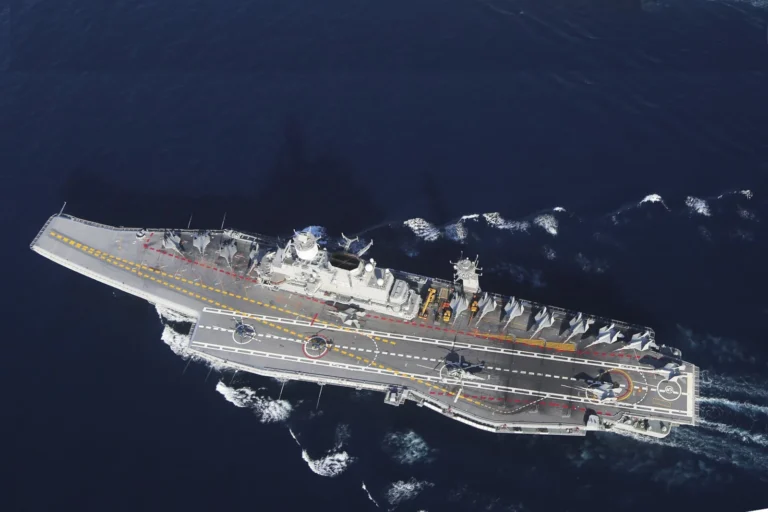 Photo: Indian Navy, via Wikimedia Commons