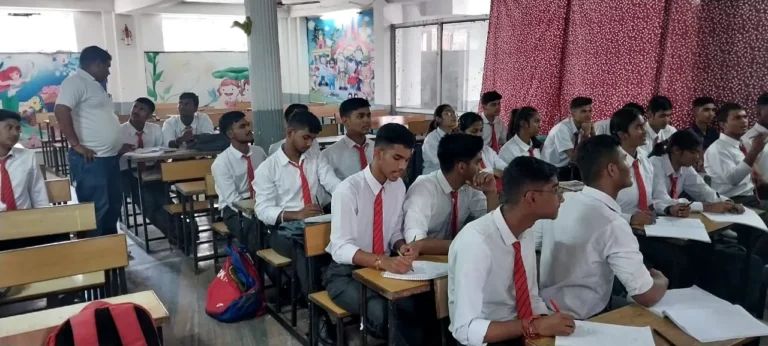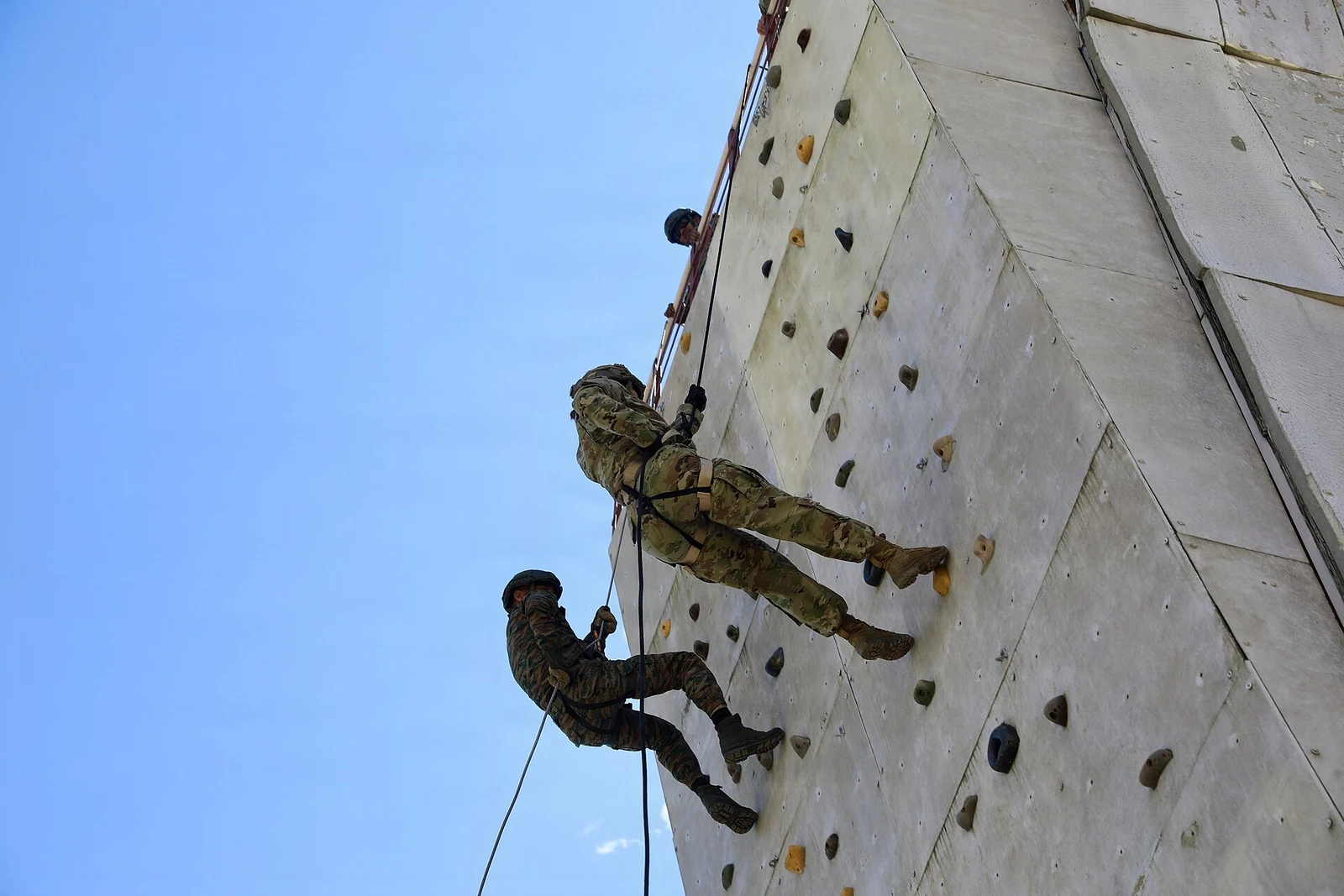
Students often ask “NDA ki taiyari kaise kare” and receive advice that is either too vague (“study hard”) or too heavy (“join six test series”). The better way is to learn what the UPSC actually tests, then build a calm plan around it. This guide explains the NDA exam as the latest notice describes it, then shows how to prepare for NDA from Class 11 without damaging your school results.
Here is a timing point that many families miss. A student who is in Class 11 in October 2026 will move into Class 12 in April 2027. The UPSC calendar for 2027 lists the second NDA and NA examination, with notification on 12 May 2027 and the examination on 19 September 2027. Candidates appearing in Class 12 can apply, so that student’s first realistic sitting is that September exam, which leaves roughly eleven months. Whether you are eligible depends on the age window printed in that notice.
Know the exam first
The written examination has two papers, and the SSB is a separate stage with equal marks.
| Stage | Marks | Duration | What it covers |
|---|---|---|---|
| Paper I: Mathematics | 300 | 2½ hours | Algebra, matrices, trigonometry, analytical geometry, calculus, vectors, statistics and probability |
| Paper II: General Ability Test | 600 | 2½ hours | Part A English (200 marks) and Part B General Knowledge (400 marks) |
| SSB test and interview | 900 | About five days | OIR, PP&DT, psychology tests, GTO tasks, interview and conference |
All written papers are objective, and the Mathematics paper and Part B of the General Ability Test are set in Hindi as well as English. Calculators and log tables are not allowed. For every wrong answer, one third of the marks assigned to that question is deducted, and unattempted questions carry no penalty. The Commission can fix qualifying marks in each paper.
Sources for the exam pattern
Mathematics: 300 marks
The syllabus has eight areas: algebra, matrices and determinants, trigonometry, analytical geometry of two and three dimensions, differential calculus, integral calculus and differential equations, vector algebra, and statistics and probability. Most of it overlaps with Class 11 and 12 Maths, so your school year is also your NDA year if you use it well.
How to study it:
- Work topic by topic, in the order your school teaches it, and add NDA-style objective questions on the same topic that week.
- Keep a one-page formula sheet for each topic. Revise it every Sunday.
- Practise speed from the start. You have to solve questions without a calculator, so learn squares, cubes, fractions and approximations.
- After every mock, list the topics where you lost marks. Fix those before moving ahead.
Maths decides rank for many candidates because it is the paper where marks are won through steady practice. Do not postpone it.
English: 200 marks
The English part tests grammar and usage, vocabulary, comprehension and cohesion in extended text. It is about one third of the General Ability Test, and a strong score here also helps in the SSB.
- Read an editorial or a good magazine article every day, and underline new words.
- Revise grammar rules by topic: tenses, subject-verb agreement, prepositions, articles, modifiers and sentence correction.
- Practise comprehension passages under time pressure.
- Write short summaries in your own words. This builds both reading and writing.
General Knowledge: 400 marks
Part B covers Physics, Chemistry, General Science, History and the freedom movement, Geography and current events. The notice gives approximate weightage: Physics 25 percent, Chemistry 15 percent, General Science 10 percent, History 20 percent, Geography 20 percent and current events 10 percent. That means science, taken together, is half of this section, and it comes mostly from the school syllabus.
A workable approach:
- Revise school science textbooks up to Class 10 first, then Class 11 and 12 Physics and Chemistry.
- Read Indian history with emphasis on culture, civilisation and the freedom movement, the Indian Constitution and administration, and world events listed in the syllabus.
- Study geography through maps: the earth, climate, rocks, rivers, ports and resources.
- Read a reliable newspaper for national and defence news, and make short monthly notes.
Negative marking: how to attempt
Because a wrong answer costs one third of the marks, blind guessing gives you nothing on average. If a question has four options and you guess at random, your expected gain is zero: a quarter chance of the full marks balances three quarters of the one-third penalty. Eliminating even one option tips the balance in your favour.
So the rule is simple. Attempt questions you can solve or narrow down. Leave a question blank when you have no idea. Train this habit during mocks, because it is easier to build in practice than to start on the exam day.
Preparation by starting point
NDA ki taiyari kaise kare after 10th. Spend the next two years on school-level strength. Learn Class 11 Maths well, read daily, and build running stamina. Our guide on joining the NDA after 10th and 12th explains the route in full.
Class 11 students. Begin the formal plan below. The cleaner your Class 11 concepts, the less you need to relearn later.
Class 12 students and passed-out candidates. Move to weekly timed mocks early in the year. If you are also preparing for boards, protect those marks, because the UPSC requires a Class 12 pass.
Girls. The exam, syllabus and SSB are the same. See our guide on NDA for girls for the eligibility and vacancy details.
A year-by-year plan from Class 11
| Phase | Time | What to do |
|---|---|---|
| Foundation | Class 11, first half | School Maths and science with weekly NDA-style questions. Daily reading. Fitness routine three days a week. |
| Syllabus coverage | Class 11, second half and summer | Finish the Maths syllabus first pass. Build GK notes by subject. Start vocabulary. |
| Practice | Class 12, first half | Topic tests twice a week. One full mock a month. Learn the SSB format. |
| Mock phase | Before the application window | One full mock each week, with an error log. Revise formulae and GK notes. |
| Final stretch | Last 60 days | Two full mocks a week. Light revision. Begin group tasks and PIQ practice. |
A school-going student can fit this into a normal week:
- Monday to Friday: one hour Maths practice, forty-five minutes English and GK, thirty minutes running or exercise.
- Saturday: topic test and error review.
- Sunday: formula revision, news summary and a family conversation practice for the SSB.
Fitness and medical readiness
The UPSC notice advises candidates to get themselves examined before applying, because a number of qualified candidates are rejected on medical grounds later. It lists common conditions that are worth correcting early, such as ear wax, a deviated nasal septum, tonsillitis, being overweight or underweight, and an under-sized chest. It also says that permanent body tattoos are allowed only on the inner side of the forearm and the back of the hand, and not on other parts of the body.
The medical and physical standards follow the Joint Order Manual of Medical Standards for Entry into Armed Forces, which UPSC points to on the Army recruiting website. Read it, then get a medical check with a doctor well before you apply. For fitness, build up to regular running, push-ups, pull-ups and swimming, and keep a balanced diet and enough sleep.
Preparing for the SSB alongside
The SSB is worth as many marks as the written exam, so start before you qualify. Read our guide to the SSB interview process, practise writing quick, positive responses on the free SSB practice page, and take part in group activities such as debate, sports and NCC if your school offers them. Officer Like Qualities develop through habits, not through a crash course the week before.
Mistakes to avoid
- Starting with many books and finishing none.
- Skipping Maths because it feels hard, then discovering it counts for 300 of 900 written marks.
- Taking mocks without analysing mistakes.
- Ignoring English until the last month.
- Treating the SSB as something to prepare after the result.
- Ignoring health until the medical.
Frequently asked questions
FAQs
Questions parents ask us.
Can't find yours? Ask on WhatsApp; a counsellor usually replies within working hours.
Ask on WhatsAppWhen should I start NDA preparation?
Class 11 is a good starting point because the Maths and science syllabus overlaps with school work. Start with basics and increase mock tests as the exam approaches.
Which is more important, Maths or the General Ability Test?
Both matter. Maths carries 300 marks and the General Ability Test 600, and the SSB carries 900. Rank depends on the combined result.
Is there negative marking in the NDA exam?
Yes. One third of the marks assigned to a question is deducted for each wrong answer. Blank answers carry no penalty.
Can I use a calculator?
No. The UPSC notice does not permit calculators or log tables in the examination hall.
Do I need to join coaching from Class 11?
Not necessarily. A disciplined student can prepare alone. Coaching helps with the structure, timed practice and the SSB, so choose it if you need that support.
Can I prepare for the NDA and board exams together?
Yes, because the Maths and science content overlaps. Keep your board marks safe, since a Class 12 pass is required.
If you want a structured start, GS India Defence Academy runs classroom NDA coaching in Dehradun and a residential NDA foundation course for Class 11 and 12 students. Call +91 70170 31757 or message us on WhatsApp to book a counselling session.